

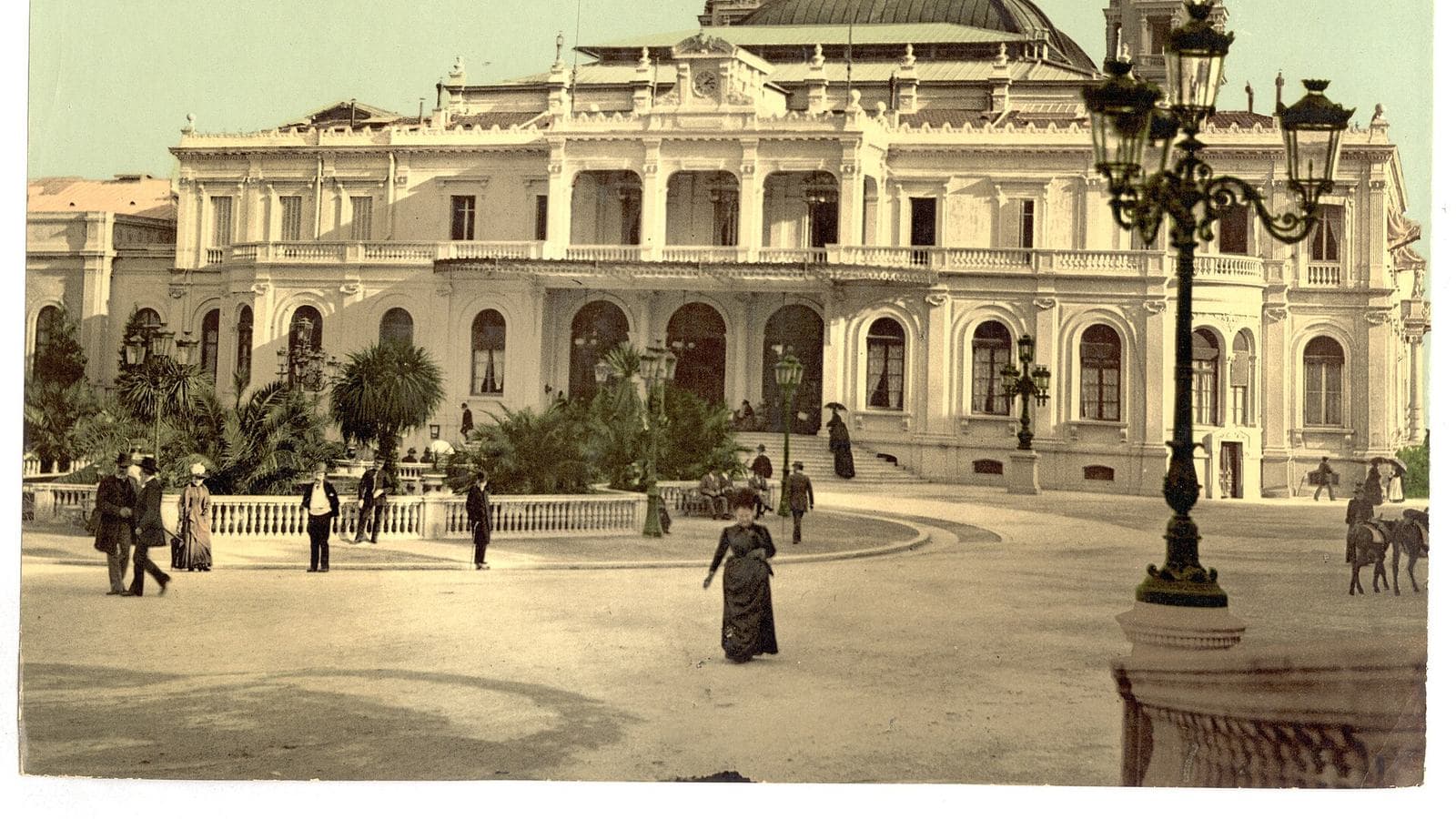
The Casino de Monte Carlo exists because Monaco needed money. Prince Charles III built the principality's first casino in 1863, prompted by the very real threat of bankruptcy facing a state with almost no other source of revenue. Within six years, the casino's profits had grown large enough that Charles III abolished taxation in Monaco entirely in 1869, a policy the principality has broadly maintained ever since.
The building most visitors picture today dates to 1878, when the original casino was replaced with a far grander structure designed by Charles Garnier, the same architect responsible for the Paris Opera. Garnier's design leans fully into the Belle Epoque style of the period, with ornate frescoes, gilded detailing and grand chandeliers throughout, set within formal gardens overlooking the harbour below.
The settlement that grew up around the new casino took the prince's own name, becoming Monte Carlo, and its rise coincided with the wider Belle Epoque, a period of cultural and economic prosperity across Europe that made destinations like this one newly fashionable among a growing class of wealthy travellers. The casino's success drew hotel construction, a new opera house, and eventually a rail connection to Paris that made the whole principality far easier to reach.
More than a century and a half later, the building still functions as a working casino rather than a museum piece, open nightly to guests who often have little idea that the ornate room they are standing in exists at all because one prince, facing bankruptcy, made a gamble of his own on a form of entertainment his own subjects were legally barred from taking part in.